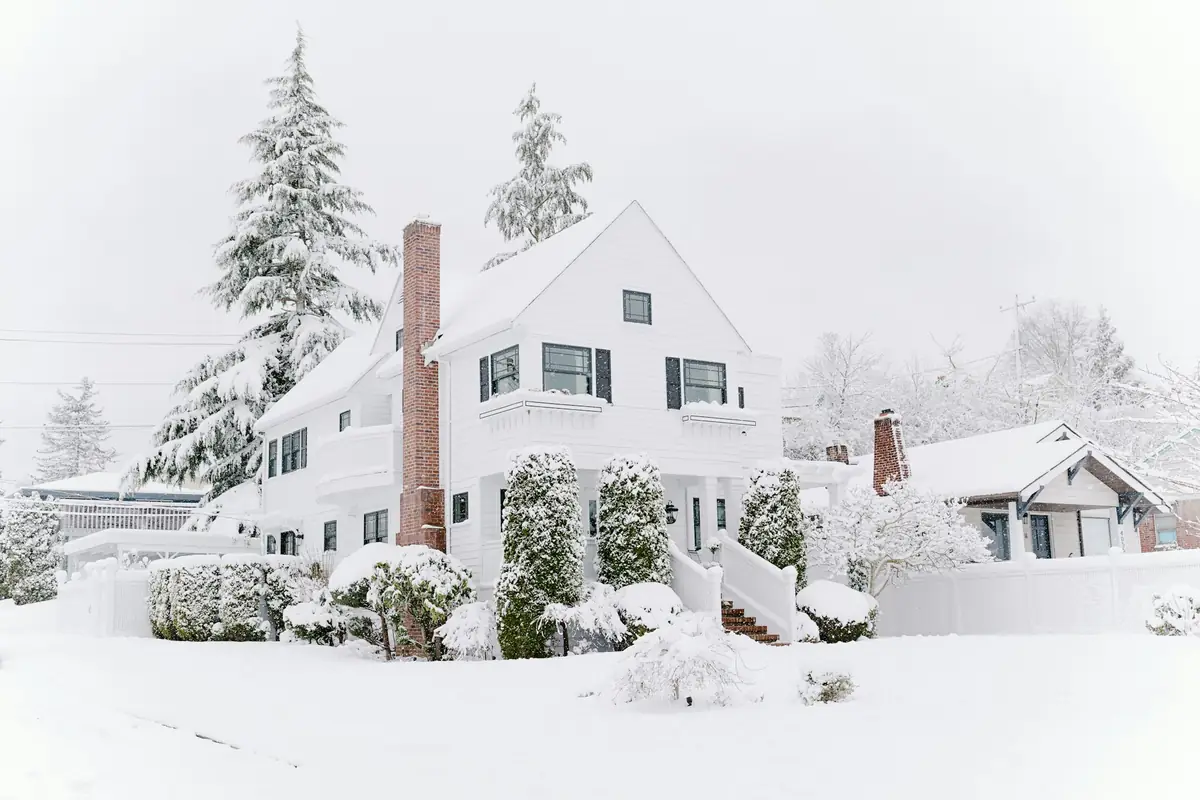
After a big snow: thaw, ice dams and leaks
The storm is the famous part. The damage usually shows up a few days later, when the snow on the roof and in the yard starts to melt. Here is what to watch in the week after, and what to do in the first 48 hours if water gets in.
On this page
Why the week after matters
Erie County has had several federal declarations for winter storms in recent years, including November 2014 (declared as a winter storm, snowstorm and flooding) and the December 2022 blizzard. The biggest single-day snowfall at the airport since 1940 was 33.9 inches, on December 10, 1995. A storm like that puts a lot of water on a roof and around a foundation, and it all comes off at once when the temperature climbs. In an average year the airport sees 11.9 thaw days, and a heavy storm followed by rain is the worst version of one.
Ice dams
Heat escaping through the ceiling warms the roof deck, snow melts on the upper roof, and the water refreezes at the cold eaves. The ridge of ice holds back the next melt, which backs up under the shingles and comes through the ceiling or down inside the wall.
- Signs: thick ice along the gutters, icicles that keep growing, stains or drips at the top of exterior walls and around window heads.
- Safe moves: a roof rake from the ground for the first few feet of snow. Don't climb an icy roof or chip ice with a hatchet; shingles break and people fall.
- Longer fix: air sealing and insulation in the attic, so the roof stays cold. Attic mold.
The basement in the thaw
Before the melt: shovel snow back a few feet from the foundation where you can, clear window wells, make sure downspouts aren't buried, and check that the sump pump runs. During it: watch the floor drain and the low corner of the basement. If water comes in, get boxes up off the floor and photograph it.
The first 48 hours if water got in
The EPA's advice is to dry wet materials within 24 to 48 hours to head off mold. That means getting water out, pulling wet carpet and pad, running fans and dehumidifiers, and opening up drywall that has soaked up water. After a big storm, every restoration company in town is busy at the same time, so call early and say exactly what's wet. Water damage restoration.
Insurance after a storm
An ice dam leak or a roof damaged by snow load is often a covered event under a homeowners policy, and mold that follows may be covered up to the policy's mold limit. Water seeping through the foundation, or backing up through a floor drain, usually isn't, unless you have a water backup endorsement. Report damage the day you find it. Insurance and mold in New York.
And after any big storm, be careful with anyone who knocks on the door offering to fix the roof today for cash. The FTC's home improvement advice applies twice over.
Questions Buffalo homeowners ask
How long after a leak does mold start?
The EPA says to dry water-damaged materials within 24 to 48 hours to prevent mold growth. In a Buffalo basement in July, when the outdoor dew point averages about 61°F and the foundation walls sit cooler than that, wet material does not dry on its own.
Does homeowners insurance cover ice dam damage?
Often, as sudden water damage from a covered event, subject to your deductible and any mold limit. Damage from long-term neglect, flooding and backups is treated differently. Check your policy and report quickly.
Should I get on the roof to clear snow?
No. Use a roof rake from the ground for the lower roof, and leave anything more to someone with fall protection. Most roofs carry a normal snow load fine; the leak risk is at the eaves.
Sources
- OpenFEMA: Disaster Declarations Summaries (Erie County, NY)
- NOAA Applied Climate Information System: daily data, Buffalo Niagara International Airport (USW00014733)
- US EPA: A brief guide to mold and moisture in the home
- NY Department of Financial Services: Homeowners and property insurance FAQ
- NY Department of Financial Services: Homeowners and Tenants Insurance Guide
- FTC: How To Avoid a Home Improvement Scam